The short version
- 14 days, about 18 km on foot, topping out at 3,892m. Rated Hard on Trail to Tides.
- 2Best in Jul–Sep.
- 3Starts from Solang / Dhundi, reached via Manali.
- 4The itinerary gains height gently: no night above 3,000 m is more than 500 m higher than the one before.
- 5Operators charge ₹7,950 to ₹8,000 per person; 3 listed, 3 verified.
The trek
Overview
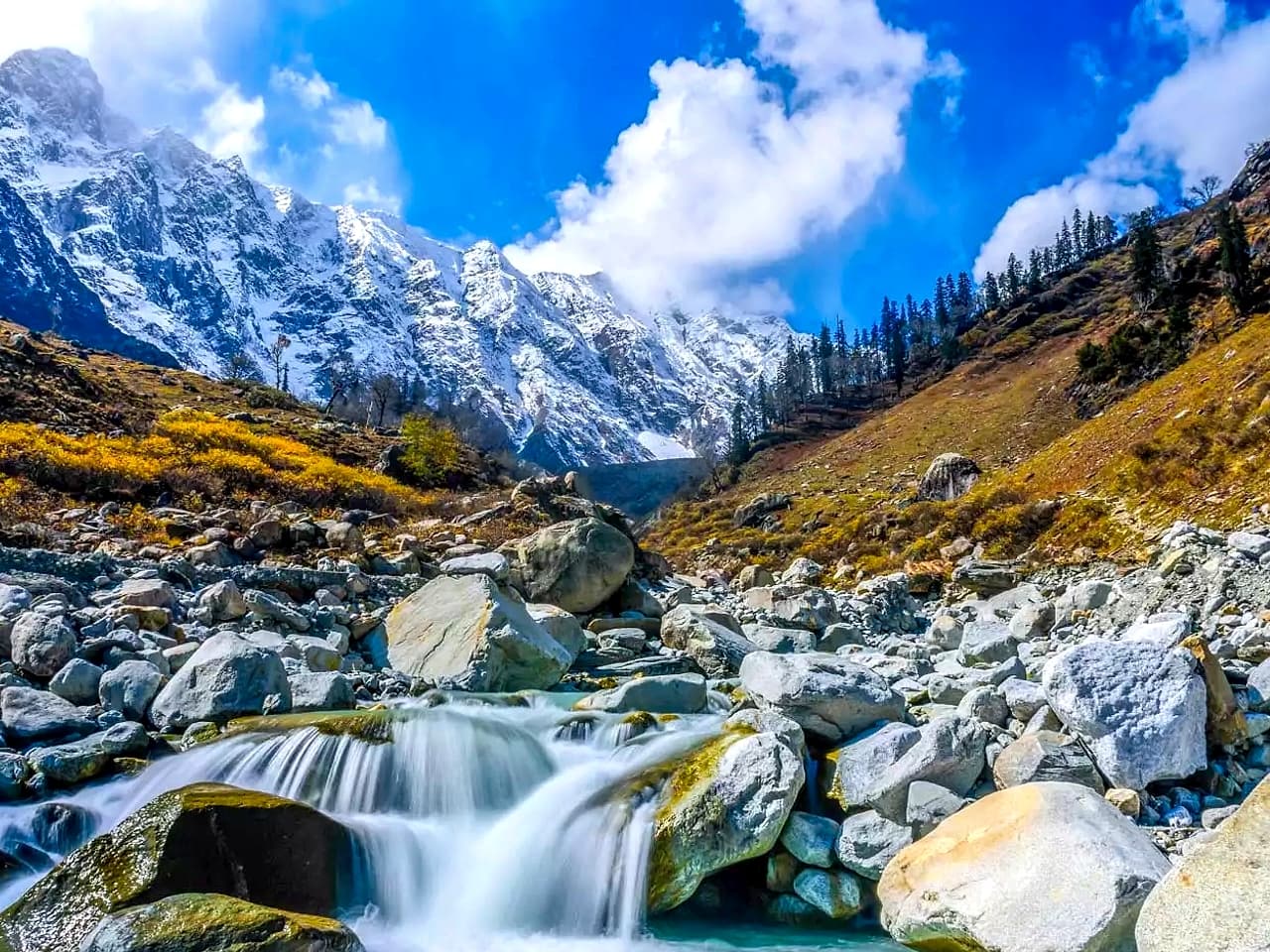
Beas Kund is the glacial lake that gives birth to the Beas River, in a high bowl above the Solang Valley. The kund itself — a perfectly still tarn reflecting Shitidhar peak, framed by the Dhauladhar and Pir Panjal ranges — is one of the most serene spots in Himachal, and the short trail through alpine meadows makes it ideal for beginners stepping into the Himalaya for the first time.
Right for you if
- First Himalayan trek: 4 days, starting from Manali
- You can walk 5–6 hours a day with a daypack
- You want Hanuman Tibba and Friendship Peak right above camp
- A good warm-up before a harder trek in the area
Think twice if
- Rain gets you down: Jul–Aug is wet and the Solang road can close
- You want solitude: it's one of Manali's most popular short treks
- Loose ground worries you: the last stretch to the lake is moraine
Season
When to go
Monsoon (July and August): rain, cloud, leeches lower down and landslides on the drive in. Wildflowers are at their best. Pack serious rain gear and add a buffer day.
Autumn: the clearest skies and steadiest weather of the year. Nights get cold quickly from October, and early snow is possible in November.
More on the Himalayan seasons: When to go.
Travel
Getting there
Meet in
Manali
Nearest airport
Kullu (Bhuntar)
Nearest railway
Chandigarh, then a 9 to 10 hour bus
By road
Manali to Solang, about 30 minutes
Most operators run a shared pickup from Manali early on day one. Arrive the evening before so a late train or flight doesn't cost you the trek, and keep a buffer day at the end: mountain roads close for landslides and snow. Travel times are approximate.
Itinerary
Day by day
A typical plan, measured along the mapped trail: 8 km with about 1,050 m of climbing. The biggest day is day 1, climbing 650 m. Operators vary it a little.
- Day1
Dhundi → Bakarthach
Up the Beas from Dhundi to a herders' meadow
≈3.8 km650 m280 msleep at 3,262 m
- Day2
Bakarthach → Bakarthach
via Beas Kund
Over moraine to the glacial lake at the source of the Beas, under Hanuman Tibba, and back
≈7.4 km400 m400 msleep at 3,262 m
- Day3
Bakarthach → Dhundi
Down to Dhundi and the drive to Manali
3.8 km280 m650 msleep at 2,889 m
Altitude
Altitude and acclimatisation
Start
2,889 m
Highest night
3,262 m
Highest point
3,679 m
Know the warning signs before you go: Altitude sickness.
Fitness
How fit you need to be
Rated Hard. A fair benchmark before you go: jog 5 km in about 35 minutes, and manage a 4 to 5 hour hill walk with a pack.
What this trek asks of you, on the ACE scale from 0 to 5:
Take the Matchmaker to compare yourself against these scores, and use the 8-week plan to close any gaps. How ACE works.
Paperwork
Permits and paperwork
- Forest or camping fees on some routes, arranged by operators. Carry original photo ID.
- Carry original government photo ID and a few photocopies.
- Rules and fees change. Ask your operator what's included and what you need to bring, two weeks before you go.
More detail: Permits and documents.
Kit
What to pack
For Beas Kund Trek in particular, on top of the standard layers:
- A proper rain jacket and trousers or a poncho, a pack cover and liner, and quick-dry layers
- A warm down or synthetic jacket for nights near or below freezing
- Broken-in trekking shoes with ankle support, trekking poles, and a 25 to 35 litre daypack with a rain cover
The full list and how to layer: What to pack. The trek page has a tick-off checklist for this trek.
Safety
Safety on this trek
- Altitude is the main risk. Don't go higher with symptoms; descend if they get worse.
- Streams rise in the afternoon and after rain. Cross early, and turn back if it looks too fast.
- Stay between the leader and the sweep, and respect the turnaround time on summit or pass days.
- Signal is scarce beyond the roadhead. Share your itinerary and your operator's emergency number with someone at home.
See also Trail craft and Insurance and emergencies.
Booking
Booking and cost
3 operators run this trek on Trail to Tides, from ₹7,950 to ₹8,000 per person. Prices usually cover the trek from the roadhead; check transport, permits and offloading.
- Trek The Himalayas4.7₹7,950
- Bikat Adventures4.8₹8,000
- Indiahikes4.8₹8,000
What to ask before you pay: Choosing an operator.
Navigation
Offline map and GPX
Download the trail, with every overnight stop and its height, and load it on your phone before you lose signal.
Trail © OpenStreetMap contributors, via BRouter.
FAQ
Questions people ask
How difficult is the Beas Kund Trek?
It's rated Hard on Trail to Tides. A fair benchmark before you go: jog 5 km in about 35 minutes, and manage a 4 to 5 hour hill walk with a pack. The highest point is 3,892m, so pace and acclimatisation matter as much as fitness.
When is the best time for the Beas Kund Trek?
Jul–Sep. Monsoon (July and August): rain, cloud, leeches lower down and landslides on the drive in. Wildflowers are at their best. Pack serious rain gear and add a buffer day.
How many days does the Beas Kund Trek take?
4 days including travel to and from the trailhead, with 3 walking days. Add a buffer day for weather or road delays.
How do I reach the Beas Kund Trek?
Most groups meet in Manali. Nearest airport: Kullu (Bhuntar). Nearest railway: Chandigarh, then a 9 to 10 hour bus. Manali to Solang, about 30 minutes.
How much does the Beas Kund Trek cost?
Listed operators charge from ₹7,950 to ₹8,000 per person. Check what's included: transport, permits, meals, tents and offloading vary.
Do I need a permit for the Beas Kund Trek?
Forest or camping fees on some routes, arranged by operators. Carry original photo ID.
This guide is built from Trail to Tides' trek data, mapped trails and operator listings, and checked by our team. Conditions change with weather and seasons: your trek leader's call on the day always comes first.