The short version
- 114 days, about 112–130 km on foot, topping out at 5,364m. Rated Moderate on Trail to Tides.
- 2Best in Mar–May, Oct–Nov.
- 3Starts from Lukla / Kathmandu, reached via Kathmandu.
- 42 nights gain more than 500 m above 3,000 m. That's common on Himalayan treks, but it's where altitude sickness tends to show up: go slowly the day before and drink well.
- 5Operators charge ₹75,500 to ₹85,000 per person; 3 listed, 2 verified.
The trek
Overview
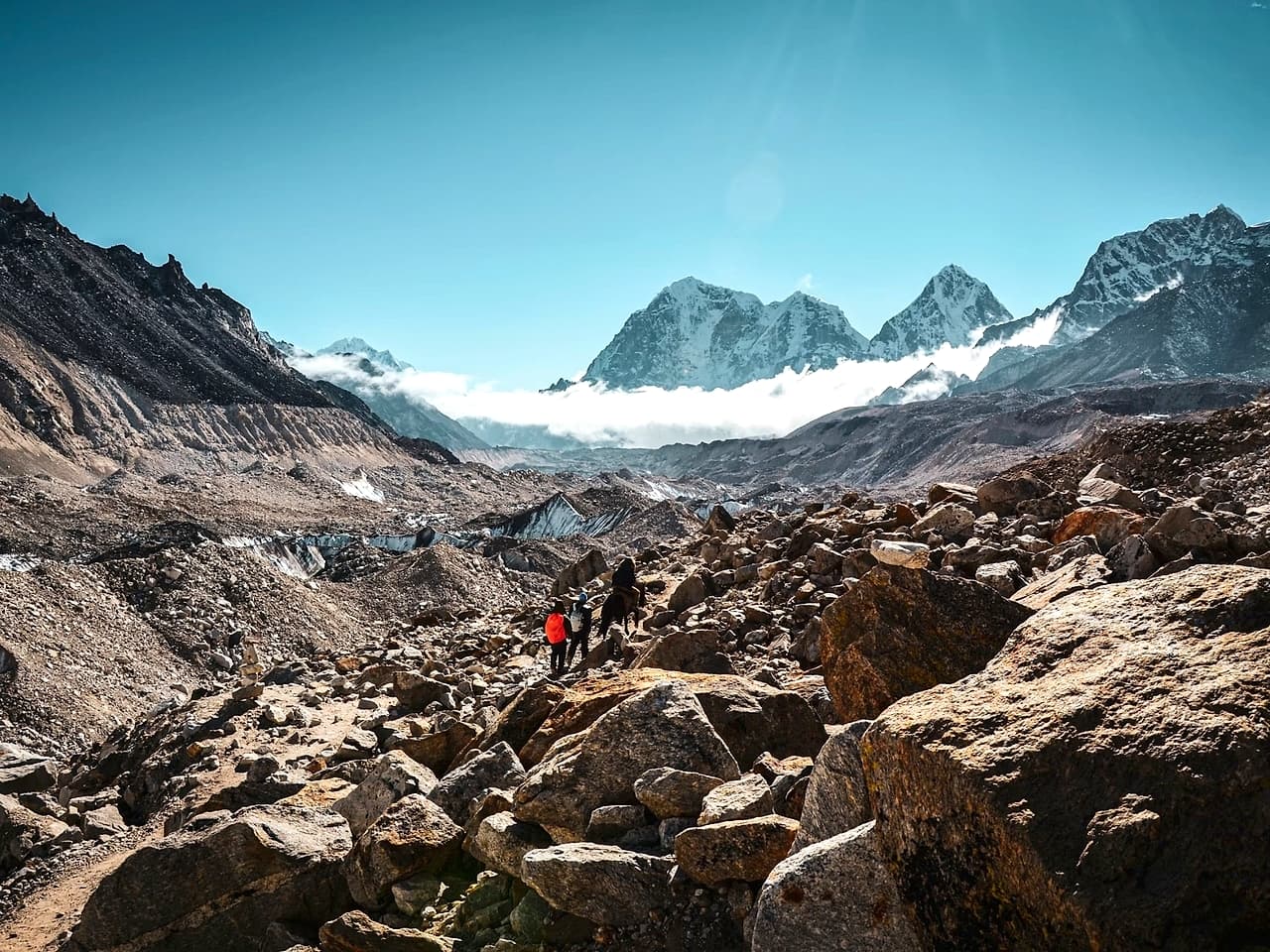
The Everest Base Camp trek is one of the most iconic journeys on Earth — 14 days through the Khumbu valley, past Sherpa villages and the monasteries of Namche and Tengboche, beneath a parade of 8,000m peaks to the base of Everest at 5,364m. Standing at EBC with the Khumbu Icefall crashing above you and Nuptse, Lhotse and Everest filling the sky is a genuinely overwhelming experience, and the journey there is as memorable as the destination.
Right for you if
- You can hike 6 hours with 1,000m of climbing and feel fine the next morning
- You've slept above 3,500m (Leh, Spiti) without getting properly sick
- You can take 15–16 days off: 12 on the trail, plus Kathmandu and spare days for Lukla flights
- Basic lodges are fine: shared toilets, unheated rooms, nights of −10°C up high
- You're Indian: no visa needed, just a passport or voter ID
Think twice if
- You have a heart or lung condition, or high blood pressure, without a doctor's OK for 5,000m
- You've had HAPE or HACE (fluid on the lungs or brain) at altitude before
- Your dates can't move: weather cancels Lukla flights often, sometimes for days
- Small planes scare you: the only quick way in is a flight to Lukla's mountain airstrip
- You want quiet trails in Oct–Nov or Apr–May: Gokyo Lakes is calmer
Season
When to go
Spring: longer days and rhododendrons lower down. Snow can linger on high ground into May, and afternoons often bring cloud or a shower.
Autumn: the clearest skies and steadiest weather of the year. Nights get cold quickly from October, and early snow is possible in November.
More on the Himalayan seasons: When to go.
Travel
Getting there
Meet in
Kathmandu
Nearest airport
Kathmandu, then a flight to Lukla
Nearest railway
No railway; Indian trekkers often fly or drive to Kathmandu
Most operators run a shared pickup from Kathmandu early on day one. Arrive the evening before so a late train or flight doesn't cost you the trek, and keep a buffer day at the end: mountain roads close for landslides and snow. Travel times are approximate.
Itinerary
Day by day
A typical plan, measured along the mapped trail: 54 km with about 3,260 m of climbing. The biggest day is day 2, climbing 840 m. Operators vary it a little.
- Day1
Lukla → Phakding
Fly into Lukla in the morning and walk down the Dudh Kosi valley
7.4 km90 m320 msleep at 2,610 m
- Day2
Phakding → Namche Bazaar
The big climb of the trek: the Namche hill, with a first view of Everest
10.4 km840 m70 msleep at 3,440 m
- Day3
Rest day at Namche Bazaar
Acclimatisation day: a short climb above Namche and back to sleep low
- Day4
Namche Bazaar → Tengboche
Across the valley side to the monastery, facing Ama Dablam
9.5 km710 m280 msleep at 3,867 m
- Day5
Tengboche → Dingboche
Through Pangboche into the Imja valley
10.4 km590 m110 msleep at 4,410 m
- Day6
Rest day at Dingboche
Acclimatisation day: climb partway up Nangkartshang and back
- Day7
Dingboche → Lobuche
Past the climbers' memorials at Thukla
7.9 km580 m0 msleep at 4,910 m
- Day8
Lobuche → Gorak Shep
via Everest Base Camp
On to Gorak Shep, then out to Base Camp and back
11.5 km390 m150 msleep at 5,175 m
- Day9
Gorak Shep → Pheriche
via Kala Patthar
Kala Patthar before sunrise for the Everest view, then down
≈15.6 km500 m1,220 msleep at 4,255 m
- Day10
Pheriche → Namche Bazaar
A long descent back through Pangboche and Tengboche
21 km380 m1,380 msleep at 3,440 m
- Day11
Namche Bazaar → Lukla
Back to the airstrip. Flights out are early the next morning: keep a spare day, as weather cancels them
17.7 km360 m930 msleep at 2,850 m
Altitude
Altitude and acclimatisation
Start
2,850 m
Highest night
5,175 m
Highest point
5,364 m
Know the warning signs before you go: Altitude sickness.
Fitness
How fit you need to be
Rated Moderate. A fair benchmark before you go: jog 5 km in about 40 minutes, or climb 40 floors with a 5 kg pack.
What this trek asks of you, on the ACE scale from 0 to 5:
Take the Matchmaker to compare yourself against these scores, and use the 8-week plan to close any gaps. How ACE works.
Paperwork
Permits and paperwork
- Sagarmatha National Park permit and the Khumbu local area fee.
- National park or conservation area permits, plus any trekker registration. Indian citizens need a passport or voter ID; no visa.
- Carry original government photo ID and a few photocopies.
- Rules and fees change. Ask your operator what's included and what you need to bring, two weeks before you go.
More detail: Permits and documents.
Kit
What to pack
For Everest Base Camp Trek in particular, on top of the standard layers:
- Warm layers for a high camp well below freezing, even in summer, and glacier glasses for snow
- Broken-in trekking shoes with ankle support, trekking poles, and a 25 to 35 litre daypack with a rain cover
The full list and how to layer: What to pack. The trek page has a tick-off checklist for this trek.
Safety
Safety on this trek
- Altitude is the main risk. Don't go higher with symptoms; descend if they get worse.
- Stay between the leader and the sweep, and respect the turnaround time on summit or pass days.
- Signal is scarce beyond the roadhead. Share your itinerary and your operator's emergency number with someone at home.
See also Trail craft and Insurance and emergencies.
Booking
Booking and cost
3 operators run this trek on Trail to Tides, from ₹75,500 to ₹85,000 per person. Prices usually cover the trek from the roadhead; check transport, permits and offloading.
- Trek The Himalayas4.8₹75,500
- Trekup India4.4₹80,000
- Bikat Adventures4.9₹85,000
What to ask before you pay: Choosing an operator.
Navigation
Offline map and GPX
Download the trail, with every overnight stop and its height, and load it on your phone before you lose signal.
Trail © OpenStreetMap contributors, via BRouter.
FAQ
Questions people ask
How difficult is the Everest Base Camp Trek?
It's rated Moderate on Trail to Tides. A fair benchmark before you go: jog 5 km in about 40 minutes, or climb 40 floors with a 5 kg pack. The highest point is 5,364m, so pace and acclimatisation matter as much as fitness.
When is the best time for the Everest Base Camp Trek?
Mar–May, Oct–Nov. Spring: longer days and rhododendrons lower down. Snow can linger on high ground into May, and afternoons often bring cloud or a shower.
How many days does the Everest Base Camp Trek take?
14 days including travel to and from the trailhead, with 9 walking days. Add a buffer day for weather or road delays.
How do I reach the Everest Base Camp Trek?
Most groups meet in Kathmandu. Nearest airport: Kathmandu, then a flight to Lukla. Nearest railway: No railway; Indian trekkers often fly or drive to Kathmandu.
How much does the Everest Base Camp Trek cost?
Listed operators charge from ₹75,500 to ₹85,000 per person. Check what's included: transport, permits, meals, tents and offloading vary.
Do I need a permit for the Everest Base Camp Trek?
Sagarmatha National Park permit and the Khumbu local area fee. National park or conservation area permits, plus any trekker registration. Indian citizens need a passport or voter ID; no visa.
This guide is built from Trail to Tides' trek data, mapped trails and operator listings, and checked by our team. Conditions change with weather and seasons: your trek leader's call on the day always comes first.