The short version
- 115 days, about 100 km on foot, topping out at 6,476m. Rated Advanced on Trail to Tides.
- 2Best in Apr–May, Oct.
- 3Most groups start from Kathmandu.
- 4Operators charge ₹1,85,000 per person; 1 listed, 1 verified.
The trek
Overview
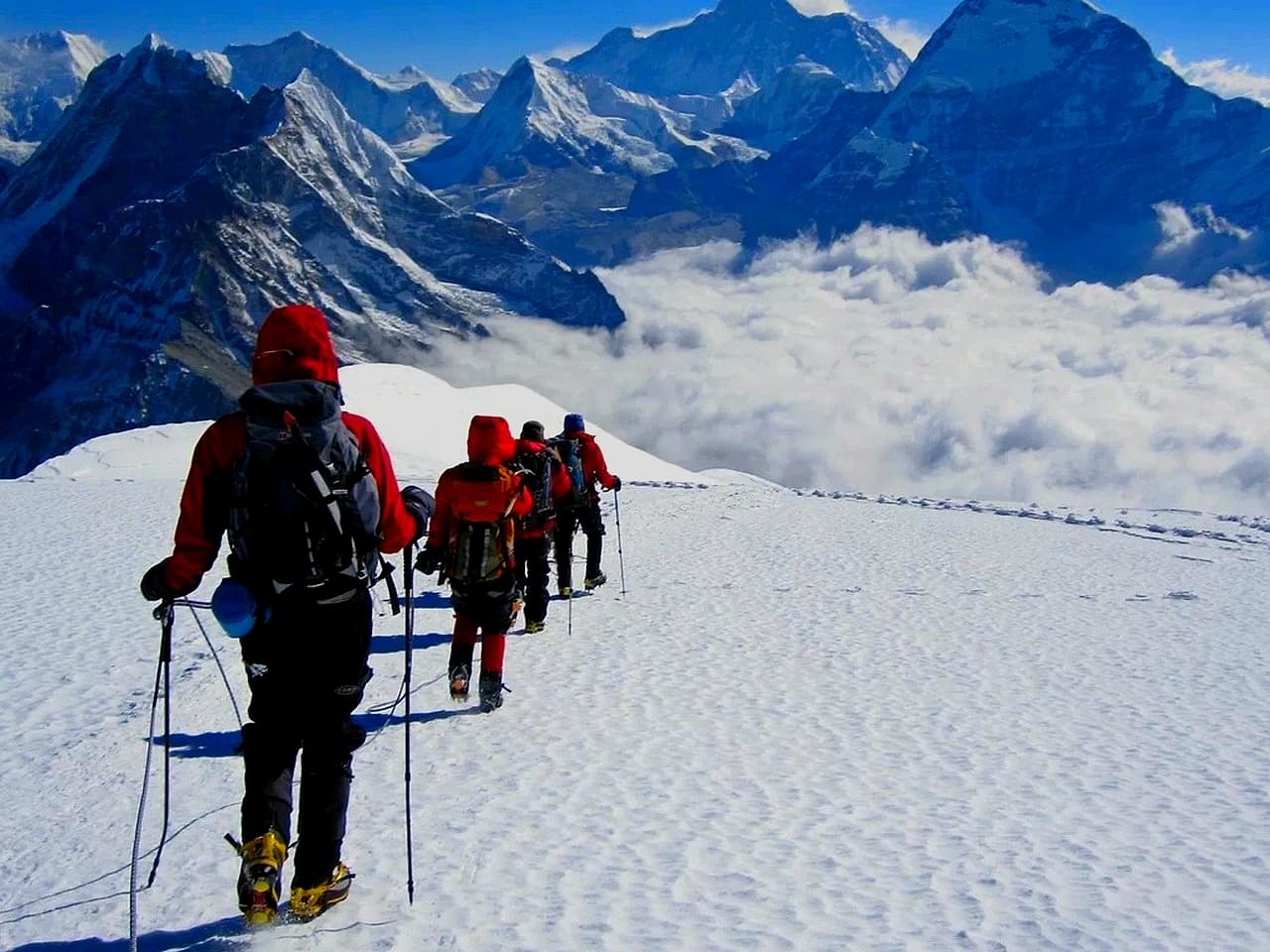
Mera Peak (6,476m) is the highest permitted trekking peak in Nepal and the highest point open to non-technical climbers — mainly a glacier walk with crampons and ice axe, but its altitude demands exceptional acclimatisation and fitness. The reward is unrivalled: five of the world's six highest mountains — Everest, Lhotse, Makalu, Cho Oyu and Kangchenjunga — visible at once from a genuinely life-changing summit.
Right for you if
- You've been above 5,000m before and felt fine
- You can walk 8–10 hours in crampons, roped to others on a glacier (training given at base camp)
- Tent nights well below −15°C at high camp are fine
- You can take 16–18 days off, with spare days for Lukla flights and summit weather
Think twice if
- You've never been above 5,000m: the summit is 6,476m
- You've had altitude sickness above 4,500m
- You have a heart, lung or blood-pressure condition without a doctor's OK for 6,500m
- Your dates can't move: Lukla flights and summit weather both cause delays
Season
When to go
Spring: longer days and rhododendrons lower down. Snow can linger on high ground into May, and afternoons often bring cloud or a shower.
Autumn: the clearest skies and steadiest weather of the year. Nights get cold quickly from October, and early snow is possible in November.
More on the Himalayan seasons: When to go.
Travel
Getting there
Meet in
Kathmandu
Nearest airport
Kathmandu, then a flight to Lukla
Nearest railway
No railway; Indian trekkers often fly or drive to Kathmandu
Most operators run a shared pickup from Kathmandu early on day one. Arrive the evening before so a late train or flight doesn't cost you the trek, and keep a buffer day at the end: mountain roads close for landslides and snow. Travel times are approximate.
Altitude
Altitude
The highest point is 6,476m. Check that your operator's itinerary sleeps no more than 300 to 500 m higher each night above 3,000 m, with a rest day on longer climbs.
Know the warning signs before you go: Altitude sickness.
Fitness
How fit you need to be
Rated Advanced. A fair benchmark before you go: several long training days with a 10 kg pack, and earlier treks above 4,000 m.
What this trek asks of you, on the ACE scale from 0 to 5:
Take the Matchmaker to compare yourself against these scores, and use the 8-week plan to close any gaps. How ACE works.
Paperwork
Permits and paperwork
- Makalu Barun National Park permit, the local area fee, and a climbing permit for Mera Peak.
- National park or conservation area permits, plus any trekker registration. Indian citizens need a passport or voter ID; no visa.
- Carry original government photo ID and a few photocopies.
- Rules and fees change. Ask your operator what's included and what you need to bring, two weeks before you go.
More detail: Permits and documents.
Kit
What to pack
For Mera Peak Expedition in particular, on top of the standard layers:
- Warm layers for a high camp well below freezing, even in summer, and glacier glasses for snow
- Technical kit: mountaineering boots, crampons, harness, ice axe and helmet. Check what the operator rents
- Sunglasses rated UV400, worn all day on snow, and SPF 50 for your face and lips
- Broken-in trekking shoes with ankle support, trekking poles, and a 25 to 35 litre daypack with a rain cover
The full list and how to layer: What to pack. The trek page has a tick-off checklist for this trek.
Safety
Safety on this trek
- Altitude is the main risk. Don't go higher with symptoms; descend if they get worse.
- Stay between the leader and the sweep, and respect the turnaround time on summit or pass days.
- Signal is scarce beyond the roadhead. Share your itinerary and your operator's emergency number with someone at home.
See also Trail craft and Insurance and emergencies.
Booking
Booking and cost
1 operators run this trek on Trail to Tides, from ₹1,85,000 per person. Prices usually cover the trek from the roadhead; check transport, permits and offloading.
- Trek The Himalayas4.8₹1,85,000
What to ask before you pay: Choosing an operator.
FAQ
Questions people ask
How difficult is the Mera Peak Expedition?
It's rated Advanced on Trail to Tides. A fair benchmark before you go: several long training days with a 10 kg pack, and earlier treks above 4,000 m. The highest point is 6,476m, so pace and acclimatisation matter as much as fitness.
When is the best time for the Mera Peak Expedition?
Apr–May, Oct. Spring: longer days and rhododendrons lower down. Snow can linger on high ground into May, and afternoons often bring cloud or a shower.
How many days does the Mera Peak Expedition take?
15 days including travel to and from the trailhead. Add a buffer day for weather or road delays.
How do I reach the Mera Peak Expedition?
Most groups meet in Kathmandu. Nearest airport: Kathmandu, then a flight to Lukla. Nearest railway: No railway; Indian trekkers often fly or drive to Kathmandu.
How much does the Mera Peak Expedition cost?
Listed operators charge from ₹1,85,000 per person. Check what's included: transport, permits, meals, tents and offloading vary.
Do I need a permit for the Mera Peak Expedition?
Makalu Barun National Park permit, the local area fee, and a climbing permit for Mera Peak. National park or conservation area permits, plus any trekker registration. Indian citizens need a passport or voter ID; no visa.
This guide is built from Trail to Tides' trek data, mapped trails and operator listings, and checked by our team. Conditions change with weather and seasons: your trek leader's call on the day always comes first.