The short version
- 18 days, about 37–52 km on foot, topping out at 4,651m. Rated Moderate on Trail to Tides.
- 2Best in May–Jun, Sep–Oct.
- 3Starts from Dhaula, reached via Dehradun.
- 4Operators charge ₹16,000 to ₹16,650 per person; 4 listed, 3 verified.
The trek
Overview
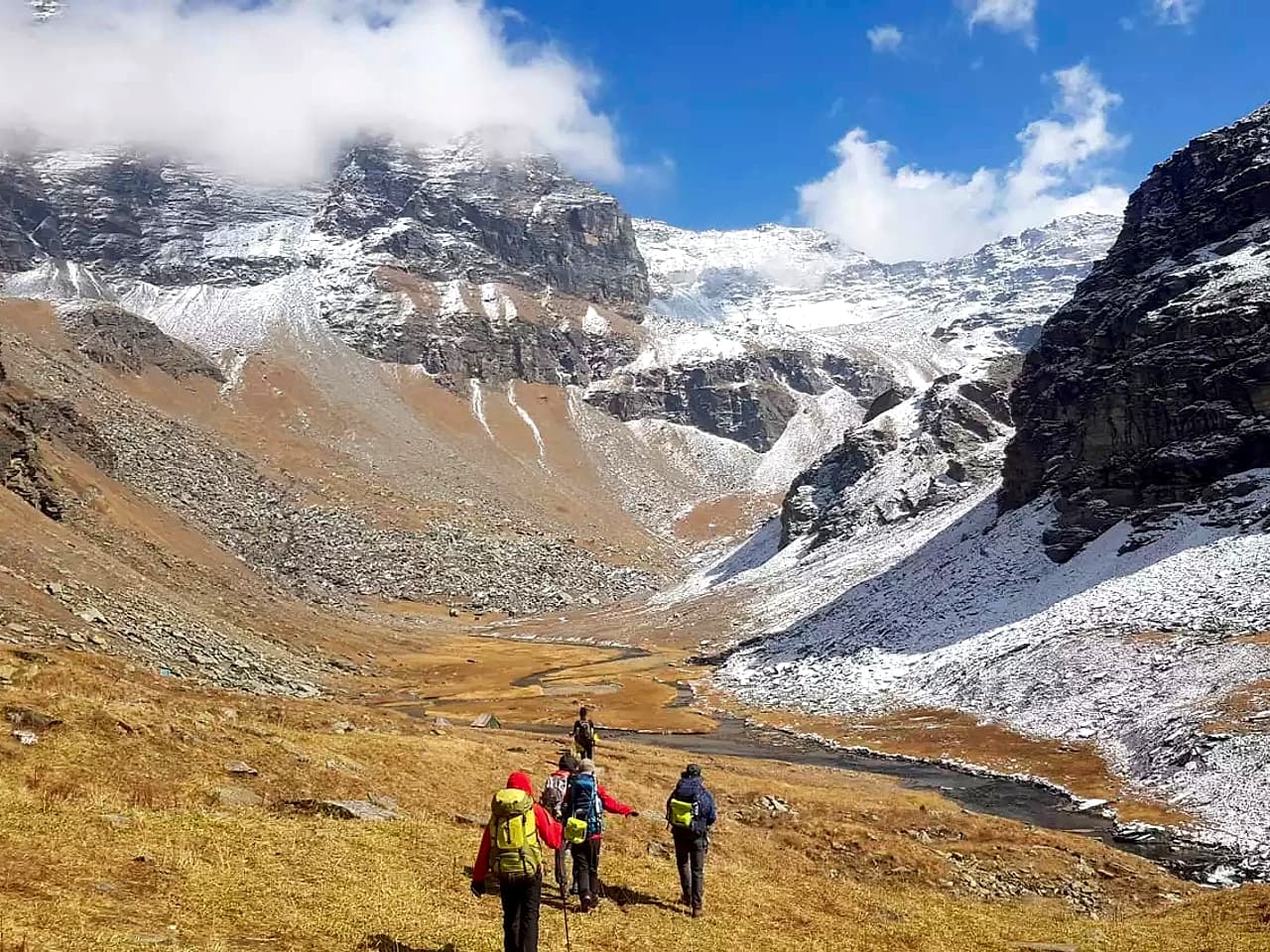
Rupin Pass is one of India's most visually spectacular routes — through hanging meadows, natural snow bridges and a steep gully climb to a 4,651m pass facing the Kinnaur Kailash range. The Upper Waterfall campsite, with a 1,500ft cascade beside your tent, is one of the most dramatic camps in India, and the snow tunnel crossing below the pass (May–June) is unique and exhilarating.
Right for you if
- You've done a multi-day trek before and slept above 4,000m
- You can manage a 10–12 hour pass day up a steep snow gully
- You can walk on snow slopes in microspikes, following the guide's line
- You want variety: a village built on a cliff, waterfall camps, snowfields
Think twice if
- It's your first Himalayan trek
- Your knees hate long descents: the way down to Sangla is long and steep
- Being cold and wet gets to you: the waterfall campsite is both
Season
When to go
Spring: longer days and rhododendrons lower down. Snow can linger on high ground into May, and afternoons often bring cloud or a shower.
June: warm days and snowmelt streams running high in the afternoons. The monsoon can arrive in the second half of the month.
Autumn: the clearest skies and steadiest weather of the year. Nights get cold quickly from October, and early snow is possible in November.
More on the Himalayan seasons: When to go.
Travel
Getting there
Meet in
Dehradun
Nearest airport
Dehradun (Jolly Grant)
Nearest railway
Dehradun
By road
Dehradun to Dhaula, 8 to 9 hours. You finish at Sangla in Kinnaur, about 8 to 9 hours from Shimla
Most operators run a shared pickup from Dehradun early on day one. Arrive the evening before so a late train or flight doesn't cost you the trek, and keep a buffer day at the end: mountain roads close for landslides and snow. Travel times are approximate.
Altitude
Altitude
The highest point is 4,651m. Check that your operator's itinerary sleeps no more than 300 to 500 m higher each night above 3,000 m, with a rest day on longer climbs.
Know the warning signs before you go: Altitude sickness.
Fitness
How fit you need to be
Rated Moderate. A fair benchmark before you go: jog 5 km in about 40 minutes, or climb 40 floors with a 5 kg pack.
What this trek asks of you, on the ACE scale from 0 to 5:
Take the Matchmaker to compare yourself against these scores, and use the 8-week plan to close any gaps. How ACE works.
Paperwork
Permits and paperwork
- Forest department permits for treks inside sanctuaries and national parks. Operators normally arrange them; carry original photo ID.
- Carry original government photo ID and a few photocopies.
- Rules and fees change. Ask your operator what's included and what you need to bring, two weeks before you go.
More detail: Permits and documents.
Kit
What to pack
For Rupin Pass Trek in particular, on top of the standard layers:
- Warm layers for a high camp well below freezing, even in summer, and glacier glasses for snow
- Sunglasses rated UV400, worn all day on snow, and SPF 50 for your face and lips
- Broken-in trekking shoes with ankle support, trekking poles, and a 25 to 35 litre daypack with a rain cover
The full list and how to layer: What to pack. The trek page has a tick-off checklist for this trek.
Safety
Safety on this trek
- Altitude is the main risk. Don't go higher with symptoms; descend if they get worse.
- Stay between the leader and the sweep, and respect the turnaround time on summit or pass days.
- Signal is scarce beyond the roadhead. Share your itinerary and your operator's emergency number with someone at home.
See also Trail craft and Insurance and emergencies.
Booking
Booking and cost
4 operators run this trek on Trail to Tides, from ₹16,000 to ₹16,650 per person. Prices usually cover the trek from the roadhead; check transport, permits and offloading.
- Indiahikes4.8₹16,000
- Trekup India4.3₹16,000
- Trek The Himalayas4.7₹16,500
- Bikat Adventures4.8₹16,650
What to ask before you pay: Choosing an operator.
FAQ
Questions people ask
How difficult is the Rupin Pass Trek?
It's rated Moderate on Trail to Tides. A fair benchmark before you go: jog 5 km in about 40 minutes, or climb 40 floors with a 5 kg pack. The highest point is 4,651m, so pace and acclimatisation matter as much as fitness.
When is the best time for the Rupin Pass Trek?
May–Jun, Sep–Oct. Spring: longer days and rhododendrons lower down. Snow can linger on high ground into May, and afternoons often bring cloud or a shower.
How many days does the Rupin Pass Trek take?
8 days including travel to and from the trailhead. Add a buffer day for weather or road delays.
How do I reach the Rupin Pass Trek?
Most groups meet in Dehradun. Nearest airport: Dehradun (Jolly Grant). Nearest railway: Dehradun. Dehradun to Dhaula, 8 to 9 hours. You finish at Sangla in Kinnaur, about 8 to 9 hours from Shimla.
How much does the Rupin Pass Trek cost?
Listed operators charge from ₹16,000 to ₹16,650 per person. Check what's included: transport, permits, meals, tents and offloading vary.
Do I need a permit for the Rupin Pass Trek?
Forest department permits for treks inside sanctuaries and national parks. Operators normally arrange them; carry original photo ID.
This guide is built from Trail to Tides' trek data, mapped trails and operator listings, and checked by our team. Conditions change with weather and seasons: your trek leader's call on the day always comes first.